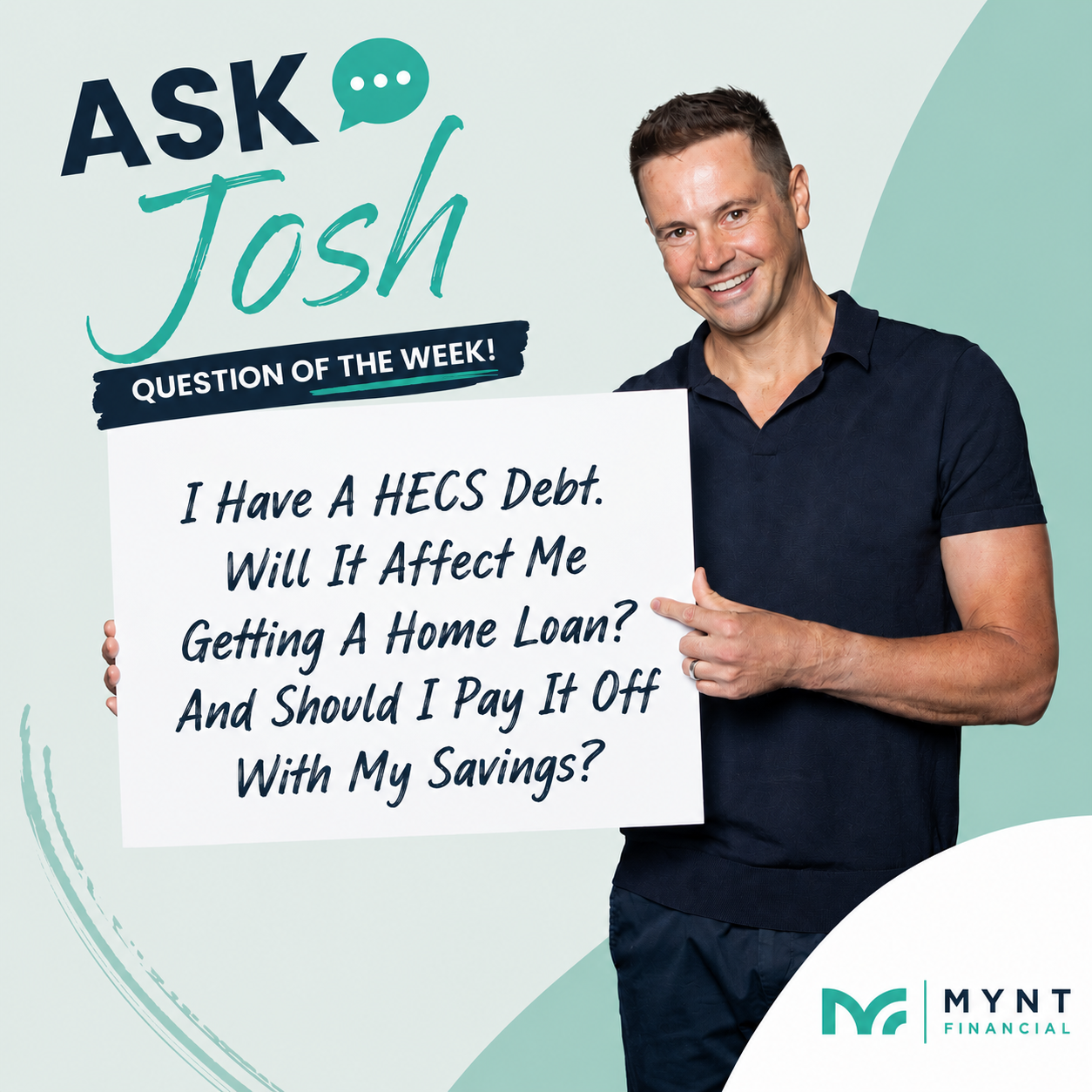
“I Have A HECS Debt. Will It Affect Me Getting A Home Loan? And Should I Pay It Off With My Savings?”
This is a great question and one I get asked all the time, particularly by first home buyers.
The short answer is:
Yes, a HECS debt can affect your borrowing capacity, but it doesn’t necessarily stop you from getting a home loan.
Here’s why.
Many people think HECS is treated like a personal loan or credit card. It’s not.
The debt itself isn’t usually the problem.
The issue is that once your income reaches a certain level, HECS repayments are deducted from your salary, reducing the amount of income you take home each week.
When lenders assess a home loan application, they’re looking at how much income you have available to meet the proposed mortgage repayments.
So if two people earn exactly the same salary, but one has HECS and one doesn’t, the person without HECS will often be able to borrow more.
Do All Lenders Treat HECS The Same?
No.
And this is where it gets interesting.
Some lenders assess HECS more favourably than others.
We’ve seen situations where simply choosing a different lender has increased borrowing capacity by tens of thousands of dollars.
That’s why it’s important not to assume your bank’s answer is the only answer.
Should You Pay Off Your HECS Before Buying?
The answer is…
It depends.
If you’ve only got a small HECS balance remaining, paying it out could improve your borrowing capacity and help you qualify for the loan you need.
However, if you owe $30,000, $50,000 or more, using your savings to clear the debt may not be the best move.
Why?
Because your savings might be far more valuable as part of your home deposit.
I’ve seen plenty of first home buyers use all their savings to clear HECS, only to realise they’ve now delayed their home purchase because they no longer have enough deposit.
That’s why it’s important to run the numbers before making a decision.
The Takeaway
Having a HECS debt doesn’t mean you can’t buy a property.
It simply means we need to understand how it’s impacting your borrowing capacity and whether there are lenders that may assess your situation more favourably.
And before you rush off and pay it out, make sure you understand the impact on both your borrowing power and your deposit position.
The best answer isn’t always paying it off.
Sometimes keeping those savings for your home deposit can put you in a stronger position.
Every situation is different, which is why it’s worth having a conversation before making any big decisions.
Josh Bartlett – Director of Mynt Financial
A quick note: Every lender assesses applications differently, and everyone’s financial situation is unique. The examples above are for illustrative purposes only. If you’d like to understand how HECS may impact your borrowing capacity or whether paying it off makes sense for you, reach out and we’d be happy to run through the numbers.
Ready to Chat about your situation? Book a free quick 15 minute chat.